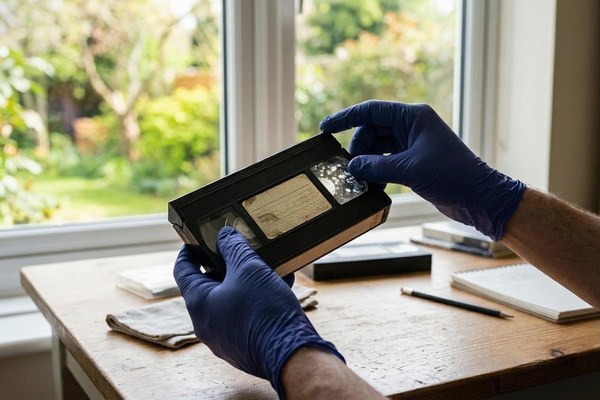
Spring VHS Tape Check: How to Spot Damp, Mould and Playback Damage After Winter
Spring VHS Tape Check: How to Spot Damp, Mould and Playback Damage After Winter
Spring is one of the best times in the UK to check old VHS tapes because winter storage conditions often reveal problems that were not obvious a few months earlier. Family tapes kept in lofts, garages, spare rooms, or under-stair cupboards may have been exposed to cold shifts, condensation, and lingering damp. By the time warmer weather arrives, the tape box can look normal from the outside while the cassette inside has developed mould, sticking, or playback instability. The VHS to DVD UK homepage highlights a long-running specialist service for families across the UK, thousands of satisfied customers, professional transfer equipment, and a typical turnaround of 7 to 14 days. That matters when you are deciding whether to trust a tape conversion company with one irreplaceable cassette or a full box of family recordings.
If you discover any signs of damage, a sensible next step is to stop testing the tape repeatedly and look at the main VHS to DVD conversion service or, if you also want a modern backup, the tape to MP4 service.
Why winter causes problems for old tapes
Magnetic tape does not like unstable storage. In the UK, winter often brings cold nights, damp air, and temperature swings in unheated spaces. A loft that feels merely chilly to you can still be a poor environment for VHS. Cases can trap moisture, reels can tighten unevenly, and mould can form if humidity lingers for weeks. The tape may still look fine in a stack, but the real test is whether it smells musty, winds smoothly, and shows visible contamination through the cassette window.
Spring is a smart inspection point because it lets you catch problems before summer heat adds a second layer of stress. If a tape already shows signs of damp damage, waiting through another season rarely improves the situation.
The warning signs to look for
Use this checklist when inspecting tapes after winter storage:
| Sign | What it may mean | What to do |
|---|---|---|
| White or fuzzy residue | Possible mould growth | Stop playback attempts and isolate the tape |
| Musty smell | Damp storage and potential contamination | Move to a dry room and seek advice before replaying |
| Warped or cracked case | Physical storage damage | Handle gently and avoid forcing into a machine |
| Squealing, sticking, or stopping during playback | Tape drag or internal damage | Stop immediately to avoid further harm |
| Heavy tracking noise or unstable picture | Playback or tape degradation | Limit testing and plan conversion |
The most important rule is not to keep “checking just one more time”. Repeated retries can make a fragile tape worse.
What not to do when you suspect mould or damp
Do not wipe the tape itself, do not open the cassette unless you know exactly what you are doing, and do not keep feeding it into a consumer VCR to see if it settles down. Household cleaning products and improvised repairs can destroy a tape very quickly. Even if the recording still plays, contamination can spread or the tape can snag.
A better first response is to set the tape aside, label it clearly, and keep it in a stable, dry indoor room away from direct heat. The aim is to stop the damage cycle and reduce unnecessary handling until the footage can be copied properly.
When spring is the right time to convert
If your tapes have spent years in uncertain storage, spring is a strong time to move from “I should get to that” to action. The recordings are unlikely to become more stable with age, and a seasonal inspection often reminds families how valuable the footage really is. Weddings, baby recordings, and relatives’ voices are not the sort of memories you want to leave through another damp autumn and winter.
If a tape looks healthy, convert it before it doesn’t. If it shows damage, convert it before more testing makes the job harder. Either way, spring is a practical trigger for preservation rather than another reminder that sits on the to-do list.
Frequently Asked Questions
Can mouldy VHS tapes still be converted?
Sometimes yes, but they should be handled carefully and not repeatedly tested at home. The sooner you stop playback attempts and seek a proper transfer route, the better the chance of preserving the footage.
Should I keep tapes in the loft after I inspect them?
No. If possible, move them to a more stable indoor room with lower moisture risk. Avoid places with major temperature swings or persistent damp.
What if a tape plays but the picture is unstable?
An unstable picture can mean tape ageing, playback alignment issues, or storage-related damage. If the footage matters, avoid repeated home playback and prioritise conversion sooner rather than later.
Ready to protect your family memories?
If you want a current quote or want to see the service options in one place, visit VHS to DVD UK. You can compare formats, review the service, and take the next step before more ageing tapes become harder to recover.
